Assessment of  SAPIAN  Education and  Solid Waste Management

The Municipality of Sapian has a local chief executive who is happy serving his constituents.     Mayor Joe Villanueva’s mantra, “Ibigay  sa tao ang para sa  tao”,  personifies  his  genuine  concern and love   for the people of Sapian.   Several factors inspire him to love his town and his  work –  a loving life partner,  constituents who are pleased with  his service and his gratitude for the people he is committed to serve.  He believes in the saying, “love is lovelier the second time around”.

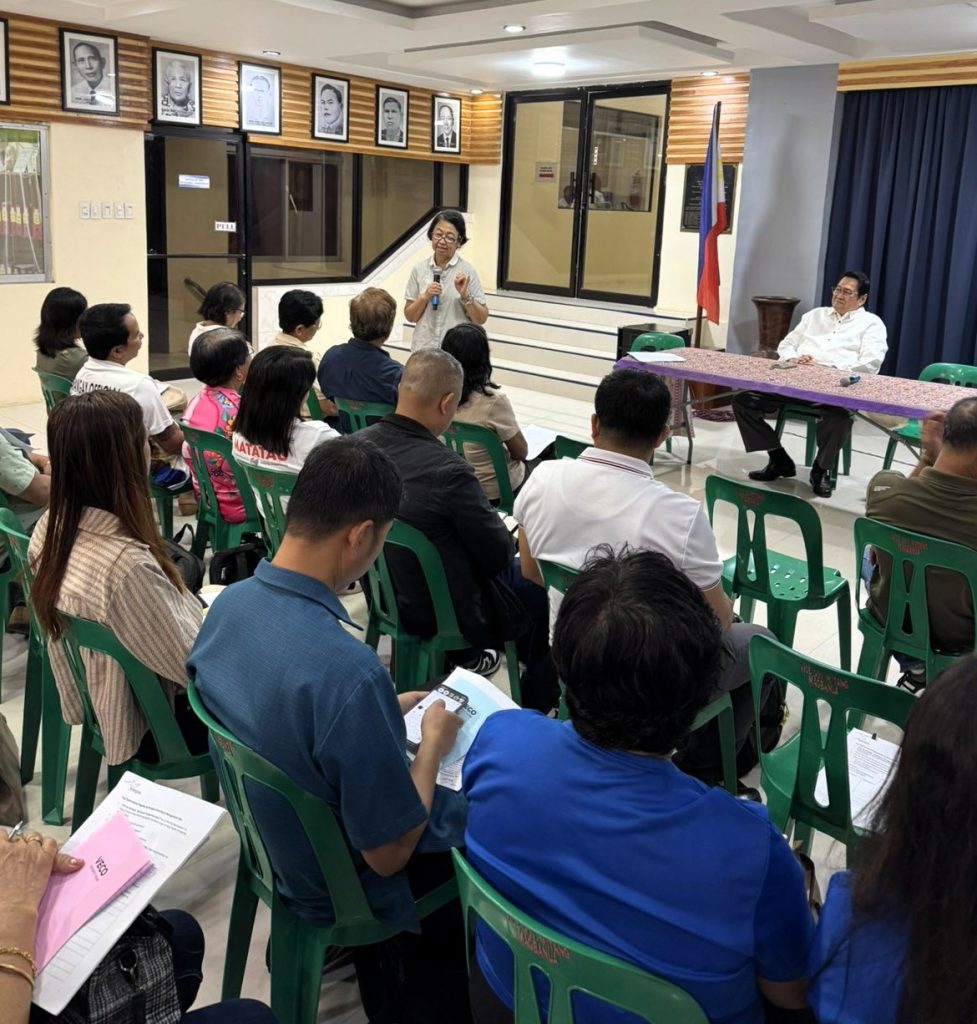
Education is the way  to success,  according to Mayor Joe.   The results of the CRLA  show 73%  of  Grade 3 students are grade ready in reading,  and  67% are  grade ready in English.   The results are not bad  but the consensus  among participants  and Mayor Villanueva  was  to increase the rating to 80%.  

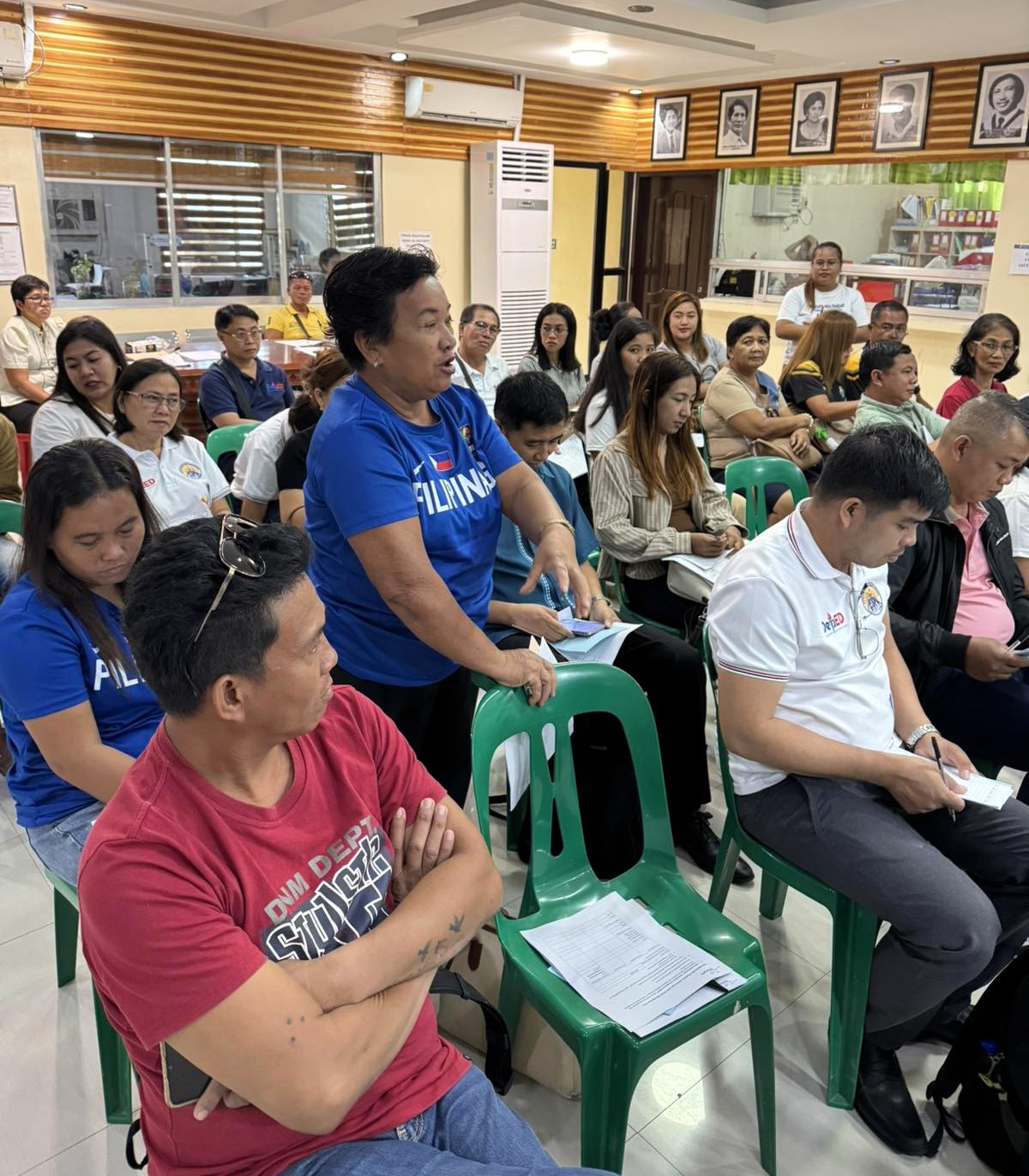
Random Assessment of  Barangays’  Sapian’s  solid waste management

  BarangaySWM Plan/Board Y/NRatingMRF (Y/N)Rating
Agtatacay NorteY3.5Y3.0
Agsilab (awardee)Y4.5Y (3)5.0
DapdapanY2.5Y3.0
PoblacionNN/aY (16)3.0
MalinangNo response from representative  
DamayanY3.0Y3.0
BilaoY2.5Y2.5
LonoyY3.0Y3.0
MajanludY3.0Y3.0

The LGU has a Ten-Year Solid Waste Management Plan  which is until 2027.   The MENRO is updating the plan.   The rating they gave is  4.0.   It has a central MRF   located at Barangay Maninang  serving  the Municipal area and Barangay Poblacion.    The property  with a  total land area of one hectare  was  purchased by the  LGU.      All garbage  collected  are  brought there.    They implement  a  “no segregation,  no collection”  policy.     Three (3) segregators  are working in the MRF  under a job order arrangement.    The facility has  a bottle crasher,  plastic shredder,  and  a vermi-bed for composting.   The LGU is working on entering into a partnership with Villar Foundation for  the processing of  shredded plastic and glass.

Plastic wastes  are  collected by ambulant vendors.    Sale proceeds  from plastics  are  used  to purchase  water and alcohol  for the workers  at the Central MRF> The LGU is  working on an arrangement  with  Passi City in Iloilo  for the transfer  of residual wastes.  The MOA  with Passi City  is  being  prepared.  The LGU is enforcing its ordinances  on  solid waste segregation but  they are  not yet at the stage  of  imposing fines and penalties. 

Challenges and Issues:  Garbage disposal and segregation system

The main problems identified were:

  • Waste segregation is not practiced in the entire LGU;  only two barangays  do
  • Lack of discipline  among community members/residents
  • Problem disposing of dead animals –  no standard rule
  • Difficulties enforcing  SWM Plan
  • Use/functionality of MRF needs  improvement –  may need to strengthen information and education campaign  and  advocacy

Plans on education  and  support needed

  1. Help struggling learners – absenteeism is high.  Learners  cannot cope up with lessons.  They need additional interventions
  • Support parents to improve their economic status –  developing livelihood programs (with the help of DSWD)
  • Development of learning materials that are relevant to learners’ context
  • Programs that will address social and emotional needs of children and their mental health
  • Last  mile schools – a checklist of needs  were asked  by  the  DepEd  but  no  support was  given

Wishlist of barangays

  1. PPE for MRF waste collectors and scrappers – rubber boots, face mask, rain coat, hand gloves
  2. Training on segregation,  recycling and composting

Should LGUs manage education?

by: Cielito Habito – @inquirerdotnet Philippine Daily Inquirer

The Local Government Code of 1991 (Republic Act No. 7160) devolved health, social welfare, and agriculture services to local government units (LGUs). With new local officials having been voted into office, should education services be similarly entrusted to them? Could the decentralization and devolution of education help us out of our current education crisis?

Actually, education management in the Philippines was supposedly decentralized down to the school level since 2001, when the reorganized Department of Education (DepEd) under RA 9155 adopted school-based management (SBM) as a governance framework. SBM transferred power, authority, and resources to the schools to empower school heads and foster transparency and local accountability. But in practice, DepEd remained a highly top-down, top-heavy bureaucracy, where learning outcomes have suffered under its sheer weight. Schools operate in a system dubbed a “memocracy,” unable to act without an authorizing memorandum from the higher-ups. Mayors have attested that their local education initiatives were blocked by division superintendents, invoking lack of a memo or approval from DepEd superiors. The Second Congressional Commission on Education (EdCom II) blames the “long history of centralized and hierarchical control exerted over the DepEd bureaucracy.”

What are the pros and cons of decentralizing and devolving education? Adherents of centralization like the easier coordination that comes with standardized policies and procedures uniformly followed throughout the system. However, this standardization could well be its very weakness, as it could prove unresponsive to peculiar local needs and slow down decision-making, especially in response to urgent local issues and emergencies. In a decentralized system, local decision-makers can respond quickly to challenges and can make more informed decisions, being more knowledgeable about the local situation. It also helps bring out the best in those in low-level positions when they are given the leeway to demonstrate their abilities and exercise creativity. Resource management is more efficient and transparent, especially when the community is involved in education governance.

With these in mind, EdCom II, through the Synergeia Foundation, pursued a “proof of concept” initiative on education devolution in the province of Iloilo, where the provincial leadership and many mayors have embraced the idea of education devolution. Amid the widely reported poor reading comprehension among third-grade Filipino children, 11 pilot municipalities in the province—Barotac Viejo, Batad, Cabatuan, Guimbal, Igbaras, Maasin, Mina, Leganes, Lemery, Pavia, and Sara—signed up for the program to focus on building skills of primary school teachers. They came together, determined to make all their Grade 3 pupils proficient readers by the end of the 2025 school year, and have pursued strengthening their teachers’ capability to facilitate learning to read and understanding what they read. Teachers were trained to harness the power of stories to develop comprehension and foster critical thinking through effective questioning. It also covered formative assessment and monitoring strategies and designing work programs tailored to students’ needs. To demonstrate their seriousness, the provincial leaders have reportedly committed to allocate P600 million for education.

The evidence has begun to come in on the difference that Iloilo’s local education initiative has made, via test results of Grade 3 children from the experimental group (i.e., from pilot areas) and control group (from nonparticipating areas). In all test items, the experimental group performed better in both Filipino and English, scoring an average of 88 percent against the control group’s 81 percent. The experimental group could answer seven out of 10 questions in English, whereas the control group could answer only five out of 10. The experimental group could answer eight out of 10 questions on a story that tests their critical thinking, whereas the control group could answer only seven out of 10. In all cases, the differences were statistically significant. LGU leaders are pleased with these initial results and are driven by even greater determination to take a stronger role in improving education services in their provinces and municipalities.

Over 20 years ago, then Naga City Mayor Jesse Robredo saw similar improvements from reforms he introduced to their local school board. There is indeed evidence in favor of shifting more education governance down to the LGU and school levels. But as provinces and their leaders vary widely, it would be best to phase it, starting with provinces like Iloilo that are ready and have the right leaders, and then roll it out as other areas shape up.

The winners will be our future generations of Filipinos and the country as a whole.

cielito.habito@gmail.com

Dagami Elementary School:  A hilltop school in Maasin,  Iloilo

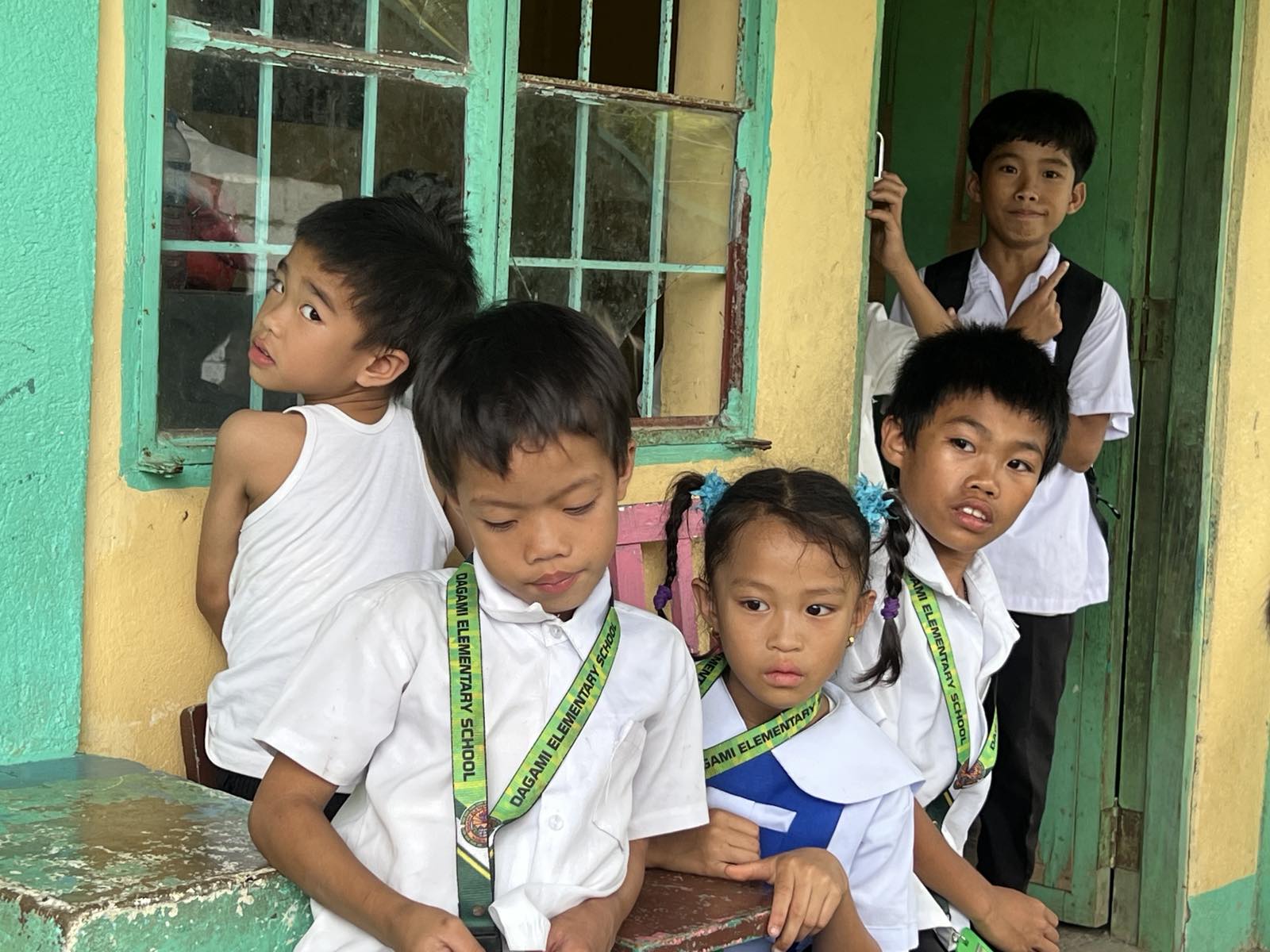
Our visit to Dagami Elementary School in Maasin, Iloilo was intended  to  find out  why Grade 3  learners  scored  very low in the  reading assessment test  conducted  last year.   Based on the test results,  there are  children who could not answer even one comprehension question correctly.  These  findings were validated  when we  had a  session  with  two  Grade 3  classes – Sections  Sterling and Euro.  

Dagami is one of the 50 barangays  in the Municipality of  Maasin,  Iloilo.   An upland barangay,  it  is  675  ft  above sea  level.   The road to Dagami  Eementary School  is  long  and winding.   When we  reach the school,  we immediately visited   a  Grade  3  classroom.  Upon entering the room  we noted that children are  timid,  they  look sad,   others are  expressionless  and always  facing down.    Most children  are  stunted  or  small for their age.     Most  are  9  years  old but  they look like they are  only  5 or 6 years old.   

When  tested in Reading,  children  can  recognize  sounds of letters and do simple  blending.   And the good news  is  they can read simple words  such as  “bag”.   It was  a  challenge  for them to read “teeth”  and  “morning”   but  they are able to do so  when  guided.    However,  they do not understand  English questions.  They cannot answer  basic English questions like  “what is your name?”,  “how old are you?”  Teacher Mary Jane said  they are not fluent in English and  Filipino language.    Hiligaynon is  used  as  medium of instruction.    Children  understand Hiligaynon better  but they are being   transitioned  to  Filipino and English  according to Teacher Mary Jane.    Another  observation is  they  do not know  how to compare and contrast.   They have   difficulty  processing   “short” vs  “tall”,  “small”  vs  “big”.    It appears  they  need  help  in developing  critical thinking skills.   

Mam  Nene  did not do a  story reading  and instead  asked  the children to sing two songs.    It was a  joy  to  hear them  sing   “this is the way we brush our teeth”  and  “when you’re happy and you know it – clap your hands,  stomp your feet,  twist your hips”.   The children grin from ear to ear.

During conversation with parents,  they  share stories of  daily struggles in life.   Rain or shine, they walk with their children to school every day.    Going to the school entails   2  to  3 hours  of walking.  Since it is an upland area  they start trekking  as early as  5AM to be in  school before 8AM.    Children take breakfast while  walking to school.    Breakfast  consists  of  rice  and  coffee.     Going home,  children get so tired  and they fall asleep right away.

When asked what support  parents  needs  from the Local Government,  a mother with seven children  becomes emotional and  said  her eldest  son needs P3,000 for his TESDA  NC2  assessment on shielded metal arc welding.  She has saved up  P1,000  and  needs to save more  to complete payment  for  the assessment fee.    To help out,  Maasin SB John Mondejar committed to provide the remainder of  the TESDA fee.   Another  mother  said  the trek to the school is  rough  and  asks  for  medical assistance  for  her son who has difficulty walking.     A father who works  as a driver   said  he supports  his family  and  sends  his children to school.   His wife is an overseas  worker.     All they  want is for their  children  to complete  education.  

Geographical disadvantage,  hunger,  and lack of better opportunities.    We can feel  the struggle of parents.    Against all odds they do  what is  best  for their children and family.    

bursa escort bursa escort

bursa escort görükle eskort görükle escort bayan bursa görükle escort bursa escort bursa escort bayan