Your request was blocked.

Assessment of  MAMBUSAO  Education and  Solid Waste Management

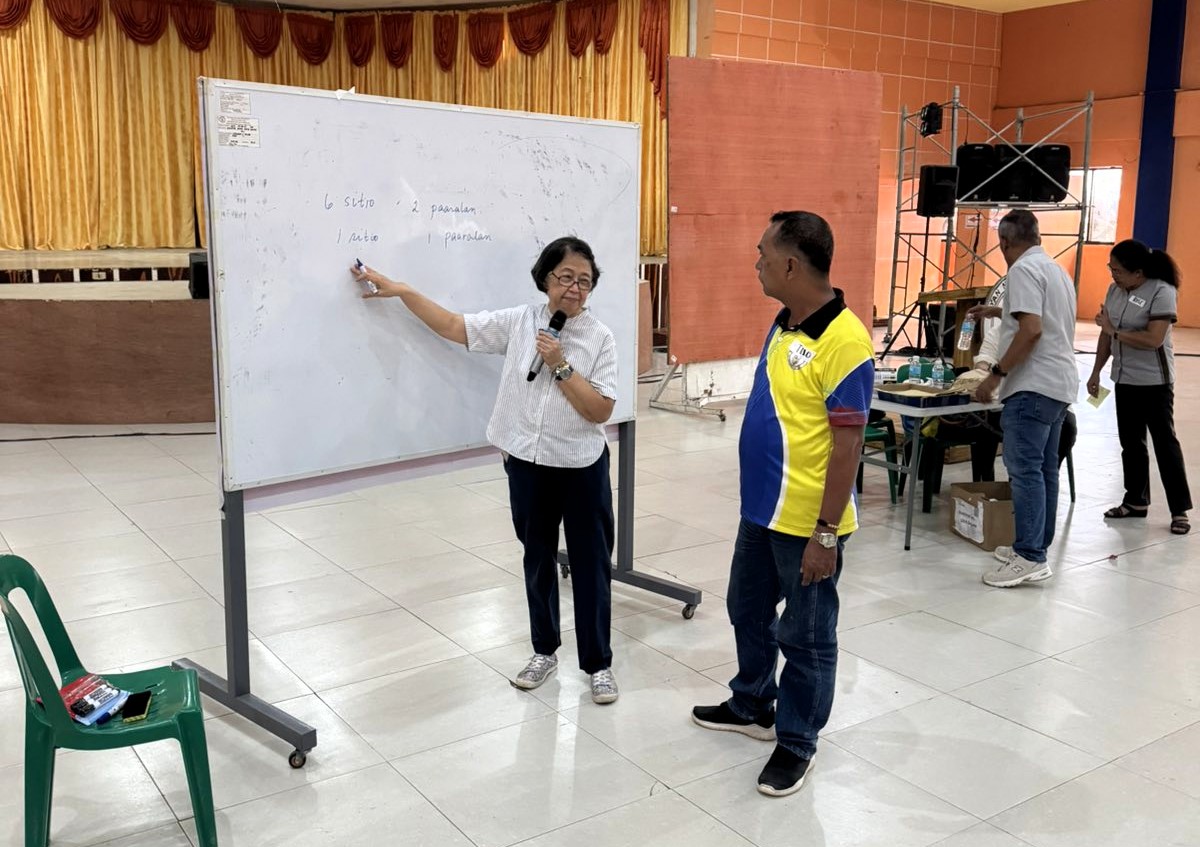
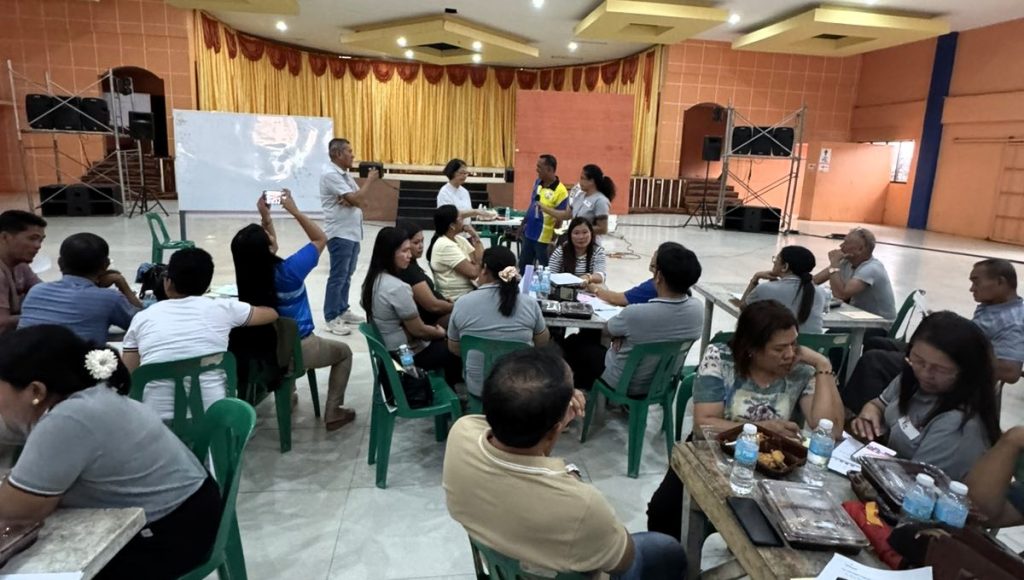
Barangay Chairmen,  Barangay Kagawads,  School Heads,  LGU MENRO and Municipal Administrator  of Mambusao attended the assessment  and discussion  on solid waste management  and  education facilitated  by Dr.  Nene Guevara of Synergeia Foundation.   Participants  were  very candid  in sharing  the  state of  SWM in their community and  expressed openness  in  working together and  finding  doable  solutions  to improve  the state  of  solid waste in the locality.  

Mambusao is a three-time winner of the Seal of Good Education Governance.   It  was a recipient  of  a special award  at the  National Education Summit held  in  February 2025.    However,  the latest  pre-assessment results  in CRLA  showed  that only 1.95%  of  children in Grade 1  are grade ready.   When asked about the reasons or factors for the low score,  school heads  said  that teachers were unable to teach well their  students  because  the reading materials provided by DepEd do not match the context of  students in  a specific grade level.   The materials  lack the “basics” on how students  should  learn reading.   They also expressed that most parents  were unable to support children’s learning at home due to work and livelihood activities.     The school head  of Bungsi Elementary School  expressed  that healthy learning institutions need to be developed in school to take care of  teachers and students’  mental health.   She said healthy physical school environment, healthy school policies, links between teachers and parents, access to health services in schools and health education are important  to a child’s  overall well being.

Random assessment of Barangays’ solid waste management

BarangaySWM Plan  (Y/N)SWM Plan RatingMRF (Y/N)MRF Rating  
AtiploY3Y3
SinandojanNn/aY2
TugasNn/aY3
BungaNn/aNn/a
Bato-batoNn/aY2
BerganteNn/aY3
CaidquidNn/aY2
BalitNn/aY3
MaralagNn/aY2

Challenges  and  Issues:  Garbage Collection and Disposal system

  • Community residents’ refusal to follow laws/ordinances
  • Lack of discipline among residents
  • Habitual dumping of garbage any where
  • There is no segregation
  • Barangays do not have vehicles that can be used to haul  garbage 
  • Wastes  that are scattered all over the place are attributed to stray dogs and cats
  • Every week,  barangay officials  and community volunteers conduct cleanup e.g.  they  pick trash from the streets and consolidate garbage  for  pick up of garbage truck.
  • Residual wastes such as diapers and sanitary napkins are disposed  by digging pits
  • Plastic bottles are consolidated  and sold to junk shops – some residents and barangays do this
  • There are ambulant vendors in town
  • Being a progressive town,  it generates  a huge  quantity of garbage 
  •  The LGU has a dumpsite  which is termed  by the MENRO (Sir Desam Montorio)  as   ‘Controlled Waste Disposal Facility”.   All residual wastes  are transferred there.   The dumpsite is controlled in the sense that it is “open and closed”  on designated schedule.  The  DENR has  called the attention of the MENRO so the dumpsite  is  now being controlled.
  • The LGU has  a Ten-Year Solid Waste Management Plan until 2027.  

Plans and Proposed  Actions on Education

  1. Literacy and Numeracy Program for non-grade ready and slow emerging  students
  2. ARAL Program implementation (Academic Recovery and Accessible Learning)
  3. Teachers Training  – new developments in instructional delivery and  new learnings
  4. Reading materials and books that are not the same as what DepEd provides.   What’s needed are materials  and books  for developing learners,  “dapat mas mababa sa grade level since students cannot understand those from their grade level” (SH of Bungsi E/S)
  5. More printed   work exercises and worksheets  that can be used  by students to gain mastery of the subject
  6. Provision of bond paper and ink  for teachers so they can  create their own exercise and learning materials.  MOOE budget  cannot finance  additional bond paper  and printer ink.  They need 120 reams of bond paper to print learning exercises and materials.  A barangay chairman committed to provide a ream of bond paper to the barangay school
  7. Barangay leaders and teachers must work together by   supporting students’   education needs  to  improve performance
  8. How to address absenteeism of students .  These students are not given failing grades and instead are given interventions  so they can cope with the lessons.    These students   help their parents in farming  and  livelihood activities  (treated child labor by participants)
  9. The Brgy Chairman of Caguidquid supports the schools in his barangay.   He funded the school’s  handwashing  facility and  perimeter fence.   He is very supportive  of  school programs

Needs and  Proposed Actions on SWM

  1. Preparation of  Barangay SWM Plans and process of implementation
  2. Capacity building on proper  waste segregation – how to reduce,   dispose  residuals and waste recycling/upcycling
  3. Waste segregation in schools  with  MRF
  4. The LGU must have a  budget allocation  for  SWM or environment similar to the GAD and DRRM.    According to the MENRO,  it is high time  for the national govt  to allow LGUs to have SWM budget because  the DENR has imposed strict rules on waste management.
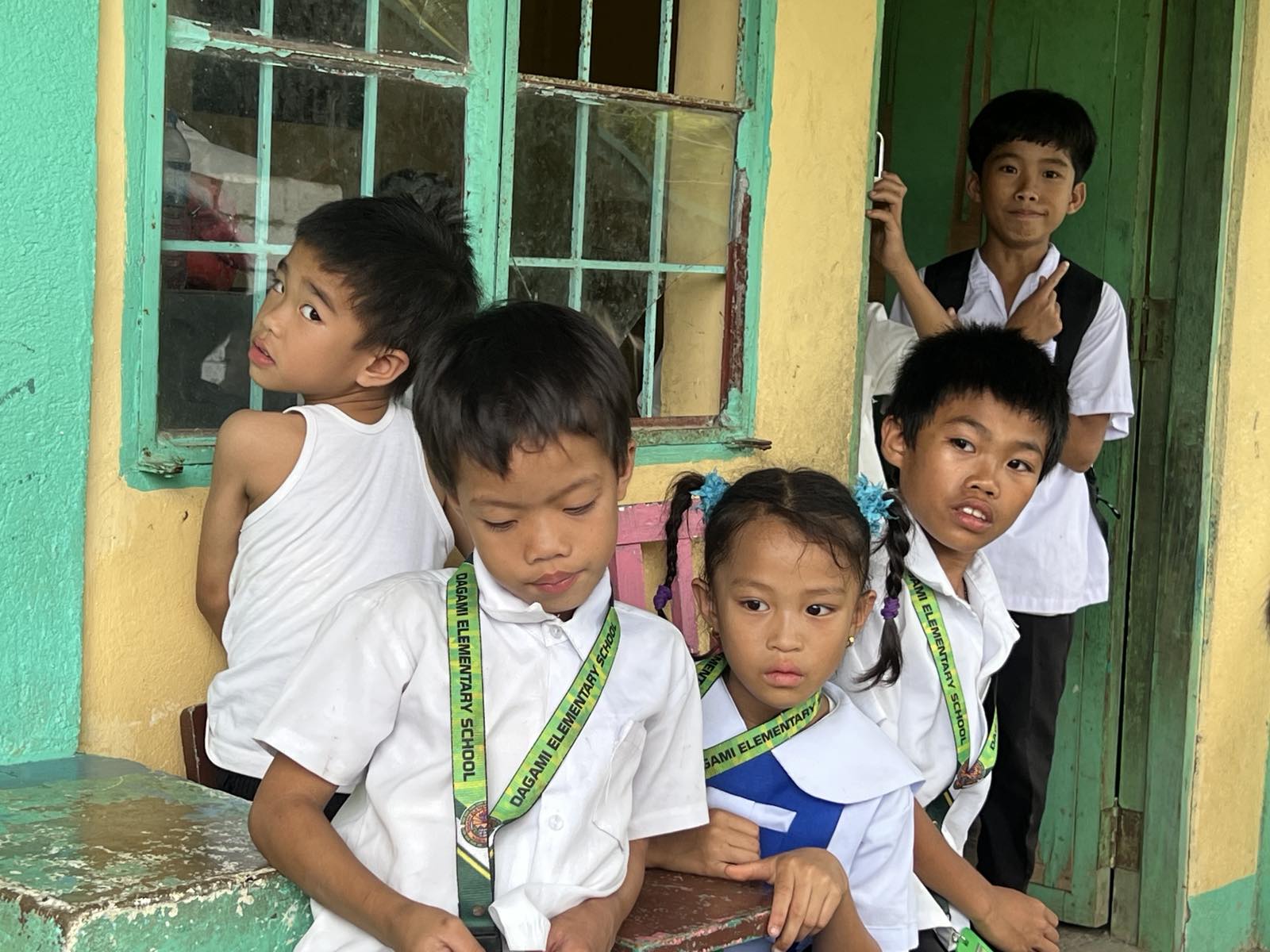
Dagami Elementary School:  A hilltop school in Maasin,  Iloilo

Our visit to Dagami Elementary School in Maasin, Iloilo was intended  to  find out  why Grade 3  learners  scored  very low in the  reading assessment test  conducted  last year.   Based on the test results,  there are  children who could not answer even one comprehension question correctly.  These  findings were validated  when we  had a  session  with  two  Grade 3  classes – Sections  Sterling and Euro.  

Dagami is one of the 50 barangays  in the Municipality of  Maasin,  Iloilo.   An upland barangay,  it  is  675  ft  above sea  level.   The road to Dagami  Eementary School  is  long  and winding.   When we  reach the school,  we immediately visited   a  Grade  3  classroom.  Upon entering the room  we noted that children are  timid,  they  look sad,   others are  expressionless  and always  facing down.    Most children  are  stunted  or  small for their age.     Most  are  9  years  old but  they look like they are  only  5 or 6 years old.   

When  tested in Reading,  children  can  recognize  sounds of letters and do simple  blending.   And the good news  is  they can read simple words  such as  “bag”.   It was  a  challenge  for them to read “teeth”  and  “morning”   but  they are able to do so  when  guided.    However,  they do not understand  English questions.  They cannot answer  basic English questions like  “what is your name?”,  “how old are you?”  Teacher Mary Jane said  they are not fluent in English and  Filipino language.    Hiligaynon is  used  as  medium of instruction.    Children  understand Hiligaynon better  but they are being   transitioned  to  Filipino and English  according to Teacher Mary Jane.    Another  observation is  they  do not know  how to compare and contrast.   They have   difficulty  processing   “short” vs  “tall”,  “small”  vs  “big”.    It appears  they  need  help  in developing  critical thinking skills.   

Mam  Nene  did not do a  story reading  and instead  asked  the children to sing two songs.    It was a  joy  to  hear them  sing   “this is the way we brush our teeth”  and  “when you’re happy and you know it – clap your hands,  stomp your feet,  twist your hips”.   The children grin from ear to ear.

During conversation with parents,  they  share stories of  daily struggles in life.   Rain or shine, they walk with their children to school every day.    Going to the school entails   2  to  3 hours  of walking.  Since it is an upland area  they start trekking  as early as  5AM to be in  school before 8AM.    Children take breakfast while  walking to school.    Breakfast  consists  of  rice  and  coffee.     Going home,  children get so tired  and they fall asleep right away.

When asked what support  parents  needs  from the Local Government,  a mother with seven children  becomes emotional and  said  her eldest  son needs P3,000 for his TESDA  NC2  assessment on shielded metal arc welding.  She has saved up  P1,000  and  needs to save more  to complete payment  for  the assessment fee.    To help out,  Maasin SB John Mondejar committed to provide the remainder of  the TESDA fee.   Another  mother  said  the trek to the school is  rough  and  asks  for  medical assistance  for  her son who has difficulty walking.     A father who works  as a driver   said  he supports  his family  and  sends  his children to school.   His wife is an overseas  worker.     All they  want is for their  children  to complete  education.  

Geographical disadvantage,  hunger,  and lack of better opportunities.    We can feel  the struggle of parents.    Against all odds they do  what is  best  for their children and family.    

Education Summit in Sara, Iloilo

Once a battle-hardened warrior on the battlefields, retired general and now Mayor Jon Aying’s transition as a civilian leader has been remarkable.  As 200 people from different walks of life trooped to Sara National High School gymnasium to attend the municipal education summit,  Mayor Aying stood tall as he delivered his Education Address to his constituents. He reviewed the schools’ performance indicators, explaining what the figures meant. Starting from enrollment figures for the past three years in elementary and high school, he explained and gave comments for his constituents to clearly understand what those pie and bar charts mean in every performance indicator flashed on the LED board. When he came across the reading proficiency and numeracy indicators, he correlated them to the dismal performance of our school children, who lagged, as shown in the PISA results with the rest of the countries of the world. He also highlighted the nutritional status of the schoolchildren. His message is to develop strategic maneuvers to teach the kids competency in every ladder of their education journey. He told his constituents how the local government spend its Special Education Fund where they matter most: payment for additional teachers, infrastructure upgrades, and community engagements. He ended his message with his favorite African proverb, “It takes a village to educate a child.”  He wanted the children of Sara to remember his administration, not for the battles won but for the futures secured.   

In the workshop that followed, the participants coming from the PTAs, SGCs, Barangay Captains and the Kagawads in charge of education, LGU officials, Members of the Sanggunian, the religious sector and the CSOs were unanimous in their answers.

For them, the most essential learning areas we need to improve are:

  • literacy and numeracy,
  • good manners and right conduct, and
  • nutrition.

Among the members of the PTA and the SGC, they push for the active involvement of parents in reading, numeracy and nutrition. A group of parents shared that they have been doing rounds of bible studies in schools to teach the kids the correct attitudes and values. Admittedly, school heads observed a decline in the enthusiasm of school children to learn because of the influence of gadgets. The heads of offices and the sanggunian members were passionate about pushing for the improvement of the health condition of the school children by actively supporting programs on health and nutrition by the local government. They commit to legislating local initiatives to improve children’s nutritional status in the first 1000 days. The barangay captain and their kagawads quickly added that every barangay and school should have their community and garden to provide vegetables for the school feeding program.    

Mayor Aying presented the syntesis of their first education summit in a manila paper which he named as the Education Governance Framework.

After attentively listening to the workshop reports, Mayor Aying presented his synthesis in a Manila paper he illustrated called the Education Governance Framework. Real-time feedback based on the answers to the workshop questions showed that the various sectors in the Municipality of Sara were pushing for improving literacy and numeracy among the school children to address the continuous decline of the state of Philippine education. Corollary to that is the concern and observation of  everyone that today’s schoolchildren hardly say sorry, excuse me, and thank you, to the dismay of everyone. Aside from their nutritional status, it also affects children’s memory, attention, and cognitive abilities. Mayor Aying pointed out that the identified problems are offshoots of the environment surrounding the child, which is the school he goes to, his family including its moral and spiritual orientation, the system of governance both at the local and national levels, and the kind of peace and order situation where he lives.   His marching order for everyone is for all stakeholders to cooperate and collaborate towards ensuring a better future for every Saranhon.

bursa escort bursa escort

bursa escort görükle eskort görükle escort bayan bursa görükle escort bursa escort bursa escort bayan