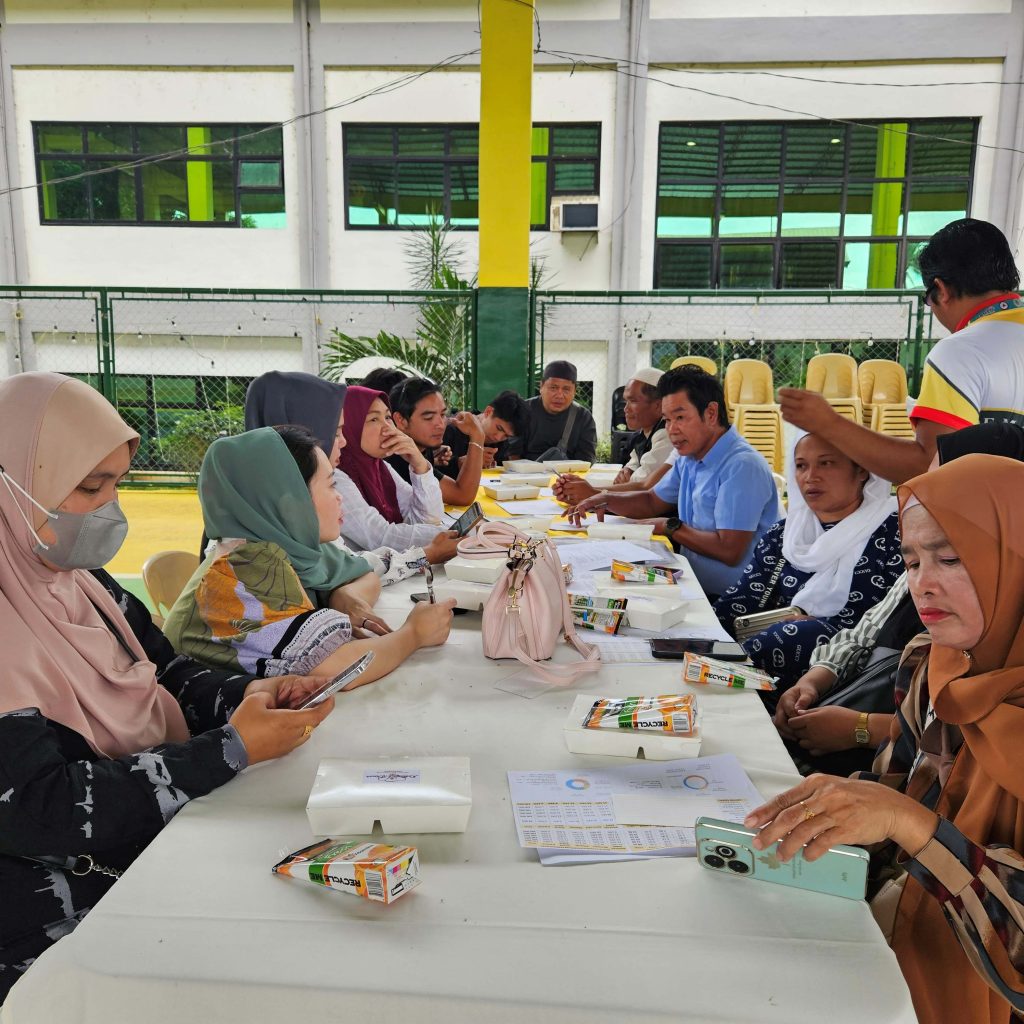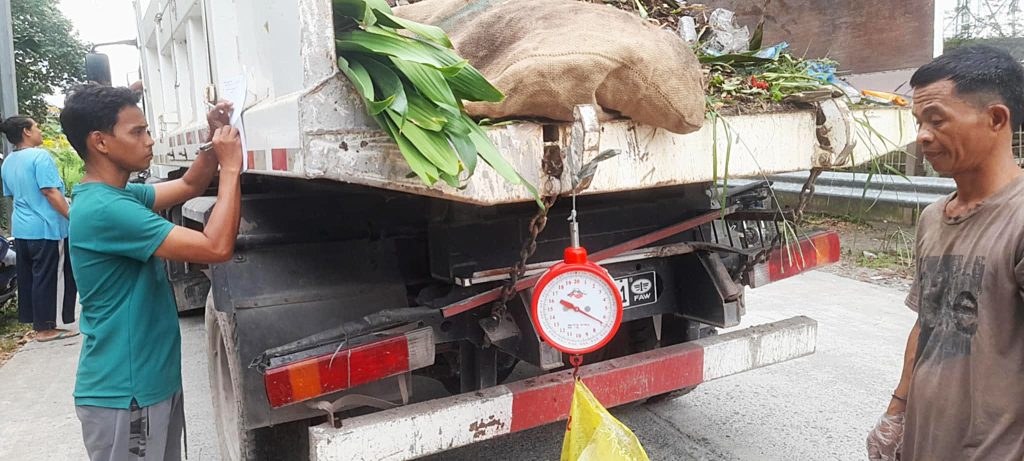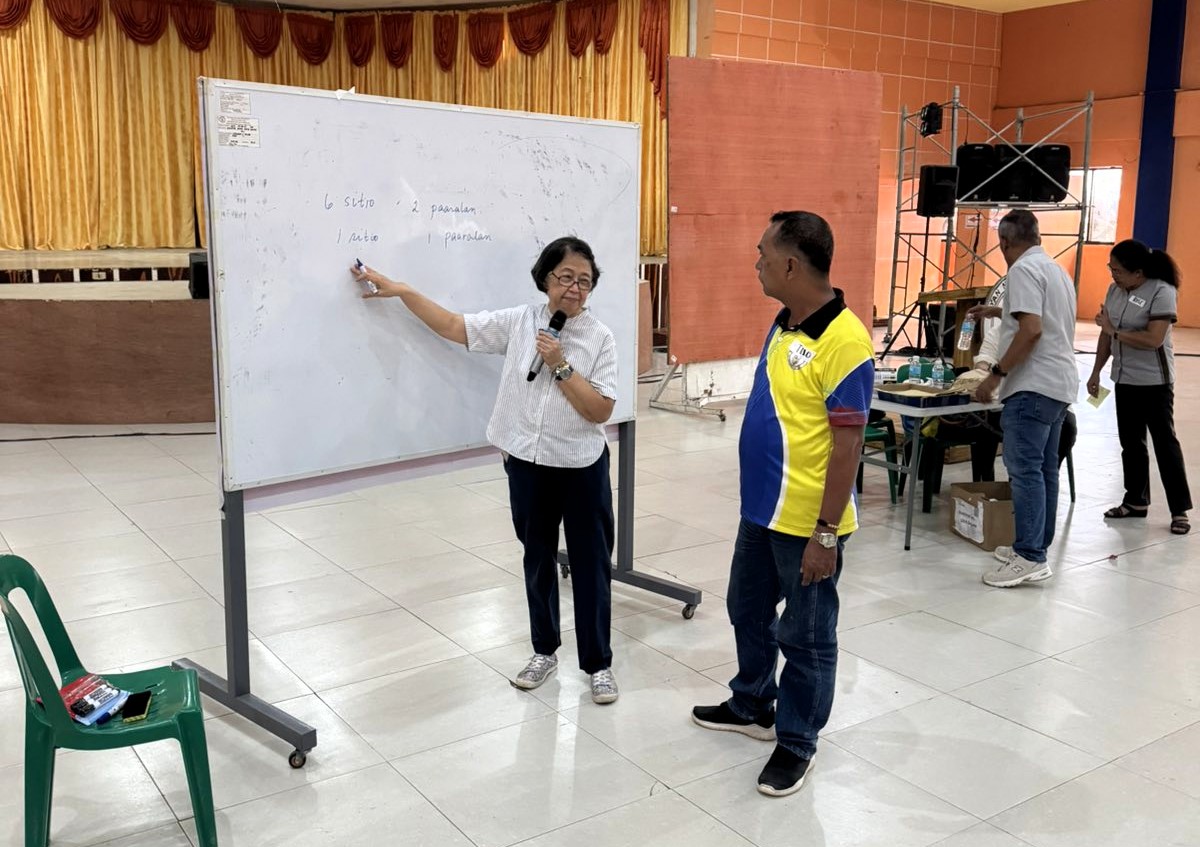
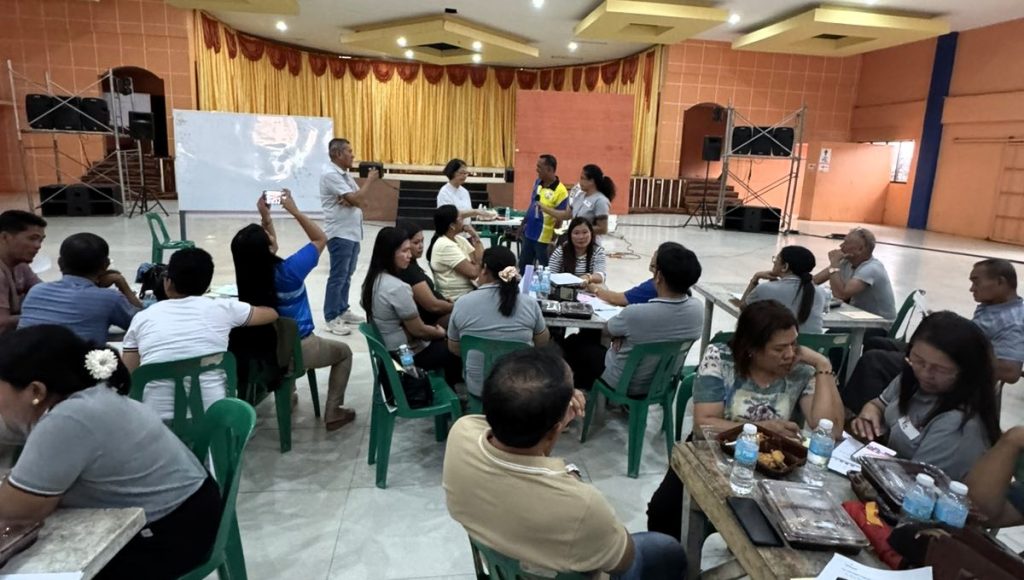
Barangay Chairmen, Barangay Kagawads, School Heads, LGU MENRO and Municipal Administrator of Mambusao attended the assessment and discussion on solid waste management and education facilitated by Dr. Nene Guevara of Synergeia Foundation. Participants were very candid in sharing the state of SWM in their community and expressed openness in working together and finding doable solutions to improve the state of solid waste in the locality.
Mambusao is a three-time winner of the Seal of Good Education Governance. It was a recipient of a special award at the National Education Summit held in February 2025. However, the latest pre-assessment results in CRLA showed that only 1.95% of children in Grade 1 are grade ready. When asked about the reasons or factors for the low score, school heads said that teachers were unable to teach well their students because the reading materials provided by DepEd do not match the context of students in a specific grade level. The materials lack the “basics” on how students should learn reading. They also expressed that most parents were unable to support children’s learning at home due to work and livelihood activities. The school head of Bungsi Elementary School expressed that healthy learning institutions need to be developed in school to take care of teachers and students’ mental health. She said healthy physical school environment, healthy school policies, links between teachers and parents, access to health services in schools and health education are important to a child’s overall well being.
Random assessment of Barangays’ solid waste management
| Barangay | SWM Plan (Y/N) | SWM Plan Rating | MRF (Y/N) | MRF Rating |
| Atiplo | Y | 3 | Y | 3 |
| Sinandojan | N | n/a | Y | 2 |
| Tugas | N | n/a | Y | 3 |
| Bunga | N | n/a | N | n/a |
| Bato-bato | N | n/a | Y | 2 |
| Bergante | N | n/a | Y | 3 |
| Caidquid | N | n/a | Y | 2 |
| Balit | N | n/a | Y | 3 |
| Maralag | N | n/a | Y | 2 |
Challenges and Issues: Garbage Collection and Disposal system
- Community residents’ refusal to follow laws/ordinances
- Lack of discipline among residents
- Habitual dumping of garbage any where
- There is no segregation
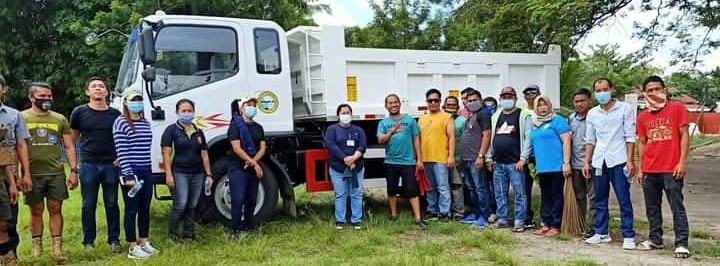
- Barangays do not have vehicles that can be used to haul garbage
- Wastes that are scattered all over the place are attributed to stray dogs and cats
- Every week, barangay officials and community volunteers conduct cleanup e.g. they pick trash from the streets and consolidate garbage for pick up of garbage truck.
- Residual wastes such as diapers and sanitary napkins are disposed by digging pits
- Plastic bottles are consolidated and sold to junk shops – some residents and barangays do this
- There are ambulant vendors in town
- Being a progressive town, it generates a huge quantity of garbage
- The LGU has a dumpsite which is termed by the MENRO (Sir Desam Montorio) as ‘Controlled Waste Disposal Facility”. All residual wastes are transferred there. The dumpsite is controlled in the sense that it is “open and closed” on designated schedule. The DENR has called the attention of the MENRO so the dumpsite is now being controlled.
- The LGU has a Ten-Year Solid Waste Management Plan until 2027.
Plans and Proposed Actions on Education
- Literacy and Numeracy Program for non-grade ready and slow emerging students
- ARAL Program implementation (Academic Recovery and Accessible Learning)
- Teachers Training – new developments in instructional delivery and new learnings
- Reading materials and books that are not the same as what DepEd provides. What’s needed are materials and books for developing learners, “dapat mas mababa sa grade level since students cannot understand those from their grade level” (SH of Bungsi E/S)
- More printed work exercises and worksheets that can be used by students to gain mastery of the subject
- Provision of bond paper and ink for teachers so they can create their own exercise and learning materials. MOOE budget cannot finance additional bond paper and printer ink. They need 120 reams of bond paper to print learning exercises and materials. A barangay chairman committed to provide a ream of bond paper to the barangay school
- Barangay leaders and teachers must work together by supporting students’ education needs to improve performance
- How to address absenteeism of students . These students are not given failing grades and instead are given interventions so they can cope with the lessons. These students help their parents in farming and livelihood activities (treated child labor by participants)
- The Brgy Chairman of Caguidquid supports the schools in his barangay. He funded the school’s handwashing facility and perimeter fence. He is very supportive of school programs
Needs and Proposed Actions on SWM
- Preparation of Barangay SWM Plans and process of implementation
- Capacity building on proper waste segregation – how to reduce, dispose residuals and waste recycling/upcycling
- Waste segregation in schools with MRF
- The LGU must have a budget allocation for SWM or environment similar to the GAD and DRRM. According to the MENRO, it is high time for the national govt to allow LGUs to have SWM budget because the DENR has imposed strict rules on waste management.